
Gut Punch!
If you’re in danger right now, call 911. For confidential support, the National Domestic Violence Hotline is 1-800-799-7233.
Best Advice: If there’s an order of protection against you, follow it exactly, go to your hearing, document your side, and call a lawyer before you do anything you’re unsure about. You can get through this, but how you handle the first few weeks matters.
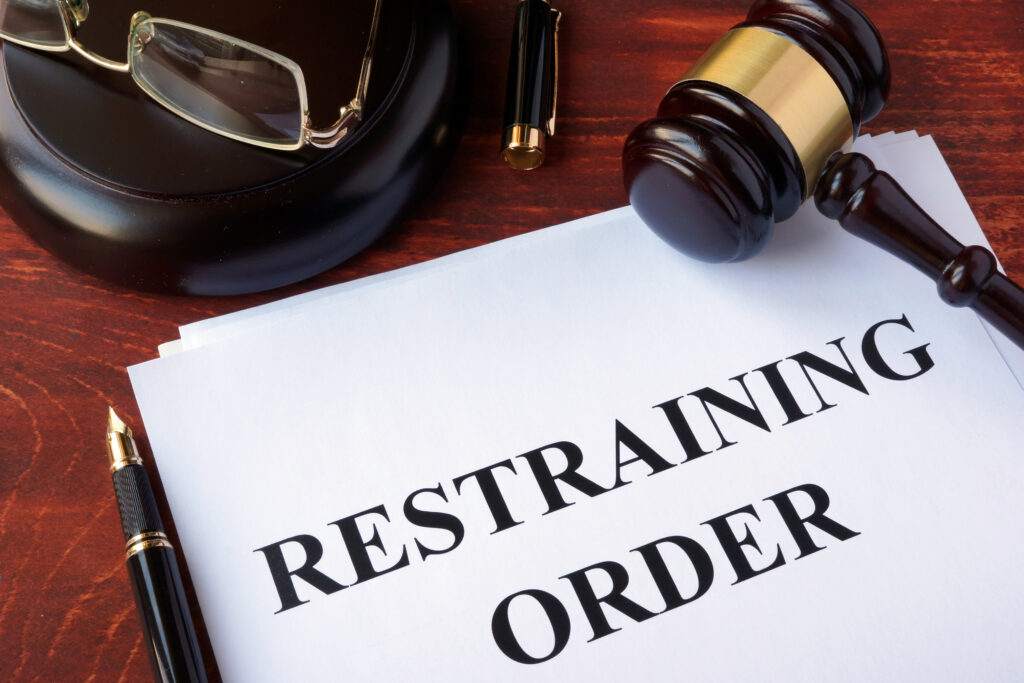
Gut punch! There really is no other way to describe what will probably be one of the most painful times of your life. If you thought getting divorced hurt, and it does, a restraining order can be even worse. It can hurt relationships, build mistrust, cost you certain rights, and even lead to criminal charges. But you can survive it if you remember a few key things.
What is an order of protection?
An order of protection (an “OP,” as it’s lovingly known) is a court order that restricts contact between two people. It can apply to a spouse, partner, or parent, and in my experience, it’s most often entered against the husband or father during a divorce or separation. See also Shields or Swords: Protection Orders in Missouri.
An order can restrain you from contacting the other person, being within a set distance of them. It can also restrain you from spending time with or contacting your children. That’s the one that really hurts and can do real damage to your future relationship with your child.
That said, we ask for these orders just as often as we defend against them. The goal is to keep everyone safe in what’s often a volatile situation. Tensions run high, and an order gives both people time and space to gain perspective and reorganize their lives.
So, what do you do if there’s a restraining order against you?
1. Do exactly what the order says, and don’t do what it says you can’t. We mean exactly. If the order says you can’t contact your spouse or partner, don’t contact them in any way other than how the order allows. Reach out with a quick question? No. Text just to find out about the schedule? Nope. Have your sister call them and ask a question for you? Not a chance. When in doubt, call us first. We’ll tell you what to do, and then we’ll reach out to their attorney to get you the answer you need. We’ll also fight to make sure the order is written as clearly as possible, so you’re protected from unfair accusations.
2. Go to your hearing. The court sets a hearing where you can respond. If you don’t show up, the order may be granted without your side. Bring a lawyer if you can.
3. Document everything. Write down every contact with the other person or your children: the date, the time, who started it, and what was said. Save texts and emails. Even things that seem like no big deal can be used against you, so make sure you can show you followed the rules. Note: Recording: Missouri generally allows you to record a conversation you’re part of, but video, recording children, or recording in ways the order prohibits can cause serious problems. Ask me before you record anything.
4. Don’t take the bait. The other person may contact you, for good reasons or bad. Either way, the order binds you, not them. Only the court can release you from it. If they reach out, don’t meet them. Document it and call us right away.
5. Don’t badmouth the other parent. This matters most if you’re restricted to supervised time with your children. You shouldn’t ever badmouth the other parent, for your child’s mental and emotional health and for your future relationship with them, and it’s often prohibited in the order.
6. Swallow your pride. Orders of protection can feel unfair, and sometimes you’ll disagree with the outcome. You can still contest it the right way, with a lawyer, but until the court changes it, you have to live with it. Every order has a term , and in nearly every case, you’ll get back to a (new) normal life, unless you break the rules of the order. Then things will probably go pretty hard for you.
Why following the order matters
Orders of Protection are there to protect the other person, and following it carefully also shows the court you can follow its rules. That matters in your divorce, especially for physical custody of your children. Break the rules, and the consequences can keep hurting for a long time. See custody and divorce for more.
In Missouri, “Restraining Order” and “Orders of Protection” get used interchangeably, but they’re not the same thing. An order of protection is created by statute for cases of domestic violence, stalking, or sexual assault. It starts as a temporary order issued before the other person has had a chance to be heard, with a hearing for a full order typically within 15 days. A restraining order is generally a civil court order, such as one entered in a divorce case, enforced through contempt [verify], and the big difference is that violating an order of protection carries criminal penalties.
Don’t lose sight of the goal: surviving the order, getting through the divorce, and moving on with your life. We help people on both sides of these cases, and we’ll help you every step of the way. We’re in this together, all the way to the end.
Don’t lose sight of the goal – surviving the restraining order, getting divorced, and moving on with your life. Markwell Law will help you every step of the way.
St. Peters, MO 63303
Phone: 636-486-1093
Fax: 636-634-3462
The use of this Website does not create an attorney-client relationship.
