
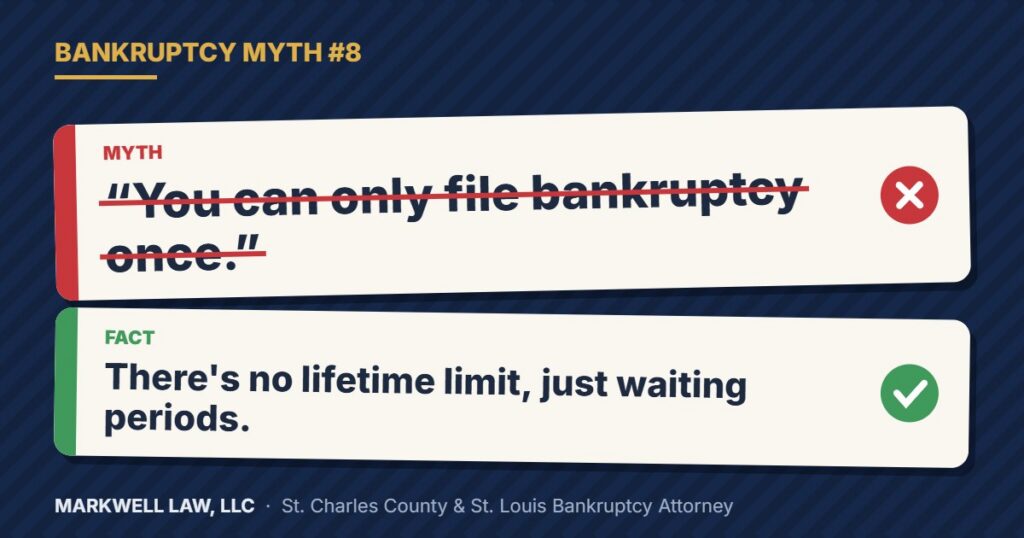
“I filed back in the day. I guess I can never do that again.” I hear some version of this more often than you’d think, usually from someone who’s been struggling for years because they believe the door is permanently closed.
It isn’t. There’s no lifetime limit on bankruptcy. There are waiting periods, and the rules depend on which chapter you filed before and which one you’re filing now.
The Waiting Periods
The waiting periods are about getting a discharge, the court order that wipes out your debts. They’re measured from the date you filed your first case to the date you file the new one:
- Chapter 7, then Chapter 7: 8 years (11 U.S.C. § 727(a)(8))
- Chapter 7, then Chapter 13: 4 years (11 U.S.C. § 1328(f)(1))
- Chapter 13, then Chapter 13: 2 years (11 U.S.C. § 1328(f)(2))
- Chapter 13, then Chapter 7: 6 years, unless your Chapter 13 plan paid all of your unsecured debts, or at least 70% of them in a good-faith plan (11 U.S.C. § 727(a)(9))
Filing Before the Waiting Period Is Up
You can technically file before the waiting period runs out. You just won’t get a discharge. That sounds pointless, but it isn’t always. A Chapter 13 filed soon after a Chapter 7, sometimes called a “Chapter 20,” can be a smart way to stop a foreclosure, catch up on a mortgage or deal with taxes that survived the first case. The automatic stay still protects you while the plan runs.
A Different Rule: Dismissed Cases
If a previous case was dismissed rather than discharged, different rules apply. Under 11 U.S.C. § 109(g), you can be barred from filing for 180 days in certain situations, like when a case was dismissed for failing to follow court orders. And if you’ve had a case dismissed in the past year, the automatic stay in your new case may be limited (11 U.S.C. § 362(c)(3)). This is exactly the kind of thing to sort out with an attorney before filing.
A Typical Example
(This is an illustrative example, not a real client.)
Greg is a union electrician who lives in St. Charles. He filed Chapter 7 in 2016 after a divorce left him with a pile of credit card debt. Life got better for a while. Then in 2025, his wife was diagnosed with cancer. Even with good insurance, the medical bills and lost income added up to more than $60,000.
Greg assumed he was out of luck because he’d “already used” his bankruptcy. But more than eight years had passed since he filed in 2016, so he was eligible for another Chapter 7 discharge. He filed, kept his home and truck, and got rid of the medical debt so his family could focus on getting his wife healthy.
Is Filing Again a Red Flag?
Not by itself. The trustee will see that you filed before, and they may ask a question or two at your meeting of creditors. But Congress wrote these waiting periods into the law because it knew life can knock people down more than once. Using them is not abusing them.
It’s also worth knowing that filing again doesn’t make your credit “doubly” ruined. If you were in enough trouble to need a second fresh start, your credit was likely already suffering.
The Bottom Line
Bankruptcy isn’t a one-time coupon. If you filed before, you may still be able to file again, and sooner than you think. Bring the date of your old case to your consultation, and we’ll figure out exactly where you stand.
For more on how long the process takes once you file, see How Long Does Bankruptcy Take?
Talk to Someone Who Actually Knows
The only opinion about your bankruptcy that really matters is one based on your actual numbers. Call Markwell Law, LLC at (636) 486-1093 or contact us online. We’ll sit down, look at your situation honestly, and tell you what your options really are.
Related Bankruptcy Myths
- Myth #2: My credit will be ruined forever
- Myth #5: Bankruptcy wipes out every debt
- Myth #7: Only irresponsible people file
This is one post in my series on common bankruptcy myths. Read the rest to separate fact from fiction.