
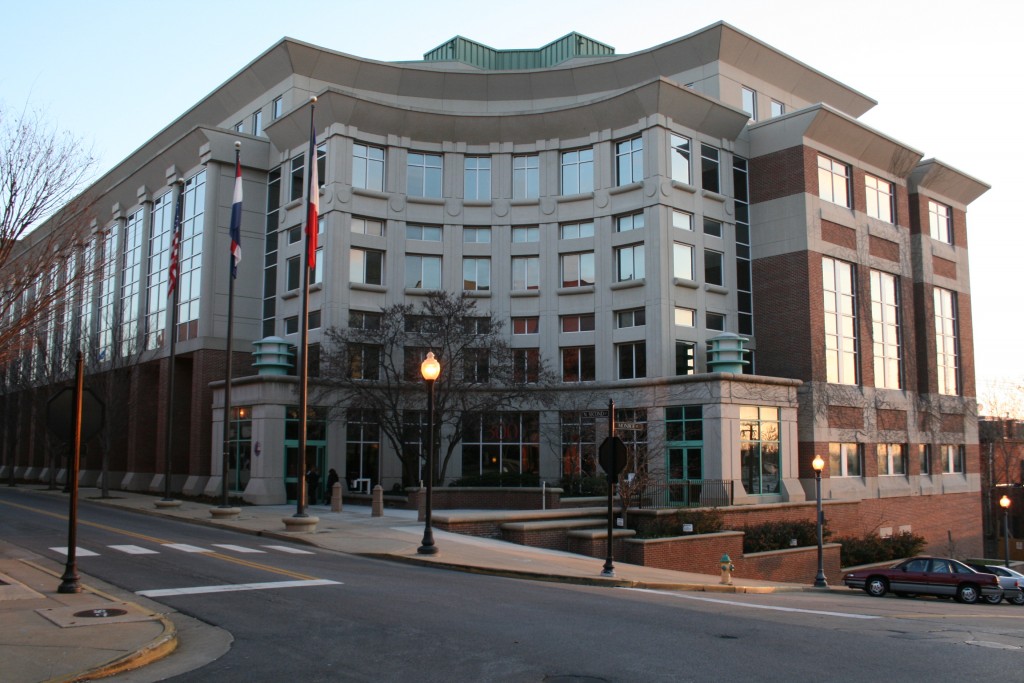
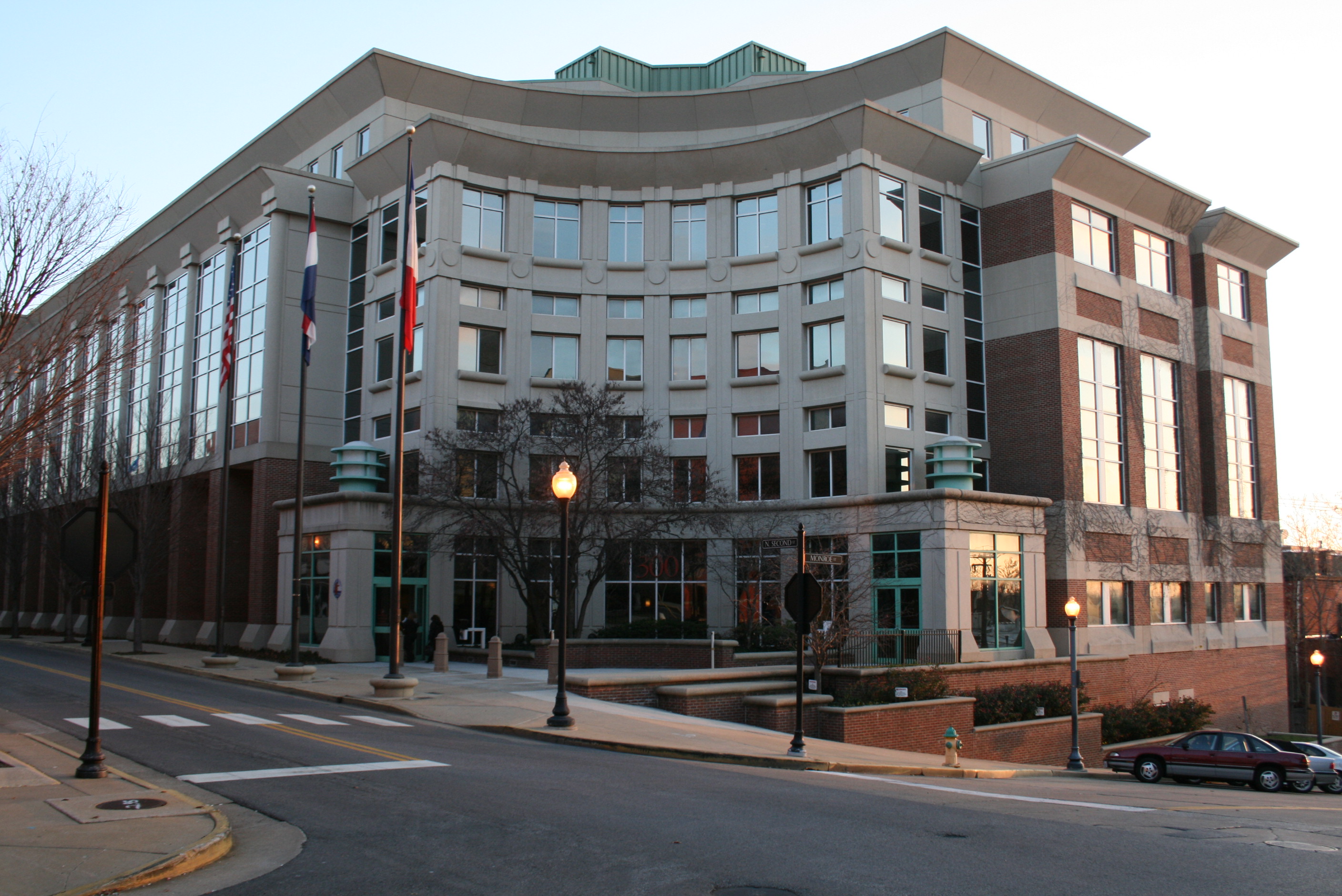
I spend a lot of time in the St. Charles County Courthouse on North Second Street. I know where the good parking is. I know which elevator is slow. I know the security line moves faster if you buy a carbon fiber belt online so you don’t have to risk your pants falling when they make you scan it.
What I didn’t know, until I went digging, was the history of the St. Charles County courthouse and how the whole thing got started. Who was the first judge? Where did they hold court before there was a courthouse? And why do we call it a “circuit” court when nobody is riding anywhere except up the parking garage ramp?
The answers turned out to be a lot more fun than a docket call in front of either Judge Johnson.
The Short Version
- 1804: The St. Charles District is created after the Louisiana Purchase.
- 1805: The first court meets in a doctor’s house on South Main Street.
- 1812: The district becomes St. Charles County, one of Missouri’s five original counties.
- 1815: Missouri’s circuit courts begin. David Barton is the first circuit judge over St. Charles County.
- 1821 to 1826: County court shares the second floor of the First State Capitol with the new legislature.
- 1846 to 1849: The county finally builds its own courthouse, on Main Street.
- 1903: The stone courthouse on Clerks’ Hill opens.
- 1993: Today’s courthouse on North Second Street is finished.
Before There Was a Courthouse
The story starts in 1804. The ink was barely dry on the Louisiana Purchase, and the United States suddenly owned a huge piece of a continent it knew almost nothing about. To get some order in place, the government carved the new land into districts. On October 1, 1804, one of them became the St. Charles District. It was enormous. For years it was the only American government on the north side of the Missouri River. If you lived north of the river and had a legal problem, you were coming to St. Charles. There was no plan B. The town had been around since about 1769 as a French river settlement. Now it was the seat of American justice for the whole north side of the frontier. Small problem: it didn’t have a courthouse. Not even close.
Court Is in Session. Please Wipe Your Feet.
The first court here wasn’t a circuit court. It was the Court of Common Pleas for the District of St. Charles. The commission that created it was signed by William Henry Harrison, then governor of Indiana Territory and the District of Louisiana. Yes, that William Henry Harrison. The one who later became President and died a month into the job. Busy career, short presidency.
The commission named six justices: Francois Saucier, Arnaud Rutgers, Daniel Morgan Boone, Timothy Kibby, Francois Duquette and Robert Spencer. If the name Boone jumps out at you, it should. Daniel Morgan Boone was a son of the Daniel Boone, who was living out in the Femme Osage country at the time. Any three of them could hold court. They met four times a year, on the first Tuesdays of January, April, July and October. They heard civil cases and kept an eye on the sheriffs, constables and jailers.
So Who Was the First Judge?
Since the court sat as a panel, the honest answer is “a committee.” If you want one name, the old county histories give it to Robert Spencer. He was a lawyer and a pioneer, and one history calls him the first judge of the common pleas court for the district. That same history says Thomas Jefferson appointed him. The surviving commission has Harrison’s signature on it. Historians, like lawyers, enjoy a good conflict in the record. Spencer stayed busy. By 1815 the territorial records list him as the county coroner. On the frontier, public service meant taking whatever job needed doing that year.
Let’s Get it On, But Where?
There’s a historical marker at 119 South Main Street. It says the first term of the Court of Common Pleas was held on the first Tuesday in January 1805, in the house of Dr. Antoine Reynal.
That’s right. The first court in St. Charles County was held in a doctor’s house. Wonder if he charged the litigants a co-pay.
1812: The District Becomes a County
In 1812 Congress reorganized the area as the Missouri Territory. The five old districts of St. Charles, St. Louis, Ste. Genevieve, Cape Girardeau and New Madrid became the first five counties. Governor William Clark, of Lewis and Clark fame, made it official by proclamation on October 1, 1812. Some sources use a December 1812 date, tied to when the territorial legislature first met. Either way, St. Charles County is one of Missouri’s five originals. That gives us bragging rights over just about every other county in the state, and we intend to use them.
The county back then looked nothing like the one you drive across today. It ran far to the west and north. Its present boundaries weren’t settled until 1818, when Montgomery and Lincoln counties were split off. The Court of Common Pleas kept right on working. Its docket from 1812 to 1820 still exists, and Lindenwood University has put it online. Somebody in 1812 kept careful records, which is more than I can say for some of my clients.
Why Do We Call It a “Circuit” Court?
I’ve wanted to explain this one for years.
In the early 1800s, frontier counties were short on people and long on territory. There was no way to put a full-time judge in every one of them. So the territory was divided into circuits, and one judge traveled from county seat to county seat, holding court in each on a set schedule. The judge literally rode the circuit, usually on horseback, on roads that were more of a suggestion than a road. The lawyers rode along too. They traveled as a group from town to town and tried whatever cases were waiting when they got there. Try handling your whole caseload out of saddlebags. Now try it in February.
David Barton, the First Circuit Judge
Missouri’s circuit courts started in 1815. That January the territory commissioned two circuit judges. Richard S. Thomas got the Southern Circuit. David Barton got the Northern Circuit, which covered St. Charles and St. Louis counties. That makes Barton the first circuit judge to sit over St. Charles County. He had local roots. He came to the area in 1809, and his first job here wasn’t practicing law. He taught school in St. Charles. He went on to be the territory’s attorney general, then a circuit judge, then one of Missouri’s first two U.S. senators, serving from 1821 to 1831. Not bad for a schoolteacher.
The clerk of both the circuit and county courts in 1815 was William Christy Jr. The St. Charles County circuit court docket from 1815 to 1819 survives too, and you can read it online through Lindenwood.
So Why Keep the Name?
Because it stuck long after the horses were gone. Today St. Charles County is a circuit all by itself, the 11th Judicial Circuit, and our judges don’t ride anywhere. The only circuit they travel is chambers to courtroom and back. Though if you’ve ever sat through a late docket, you may suspect a few of them still come in on horseback and the hallway on the fourth floor is sort of circular.
Court Upstairs, Hardware Downstairs
For most of its first 40 years, St. Charles County didn’t own a courthouse. It rented space wherever it could find it.
One of those rentals was a row of brick buildings on South Main owned by Charles and Ruluff Peck. The Pecks ran a dry goods and hardware store on the ground floor and rented out the rooms upstairs. If that sounds familiar, it should. It’s the First Missouri State Capitol.
When Missouri became a state in 1821, it needed a temporary capital while Jefferson City was being built. St. Charles got the job, partly because the locals offered free space. From 1821 to 1826 the legislature met on the second floor of the Peck buildings, and four governors ran the state from there.
The State Had Roommates
Most people don’t know this part. The state wasn’t the only tenant. The St. Charles County Court, the circuit court and the Superior Court used that second floor too. The county had been renting the same rooms the Pecks rented to the new state government.
Picture it. Downstairs, a farmer is buying nails and a sack of flour. Upstairs, one room is writing laws for a brand-new state while another is hearing a fight over a cow. That’s efficient use of real estate.
The county’s own records back this up. The first volume of county court records under statehood, transcribed by the WPA in the 1930s, opens with a session held “at the Court House in the town of St. Charles” in February 1821. Back then “the Court House” meant wherever court met that week, not a building with columns.
A Bankruptcy Lawyer’s Favorite Fact
I can’t resist this one. While the legislature was meeting in St. Charles, it abolished debtor’s prison in Missouri.
As a bankruptcy lawyer, I consider that the best piece of legislation ever written above a hardware store.
Finally, a Courthouse of Our Own
In 1833 the county got tired of being a tenant. It bought a house and lot from William Pettus for $800, planning to put a courthouse and jail there. Then, in true government fashion, it took another 13 years to start building.
Construction began in 1846. The architect and builder was Solomon Jenkins, who designed several Missouri courthouses in those years. It was finished in 1849 for about $9,000: a one-story Greek Revival temple with six fluted columns across the front.
Most Missouri courthouses of the day made do with four columns. St. Charles went with six. We’ve never been a county that does things halfway.
Right Back Where It Started
This is my favorite detail in the whole story. The St. Charles County Historical Society lists that old courthouse at 119 South Main Street. That’s the same address as the marker for Dr. Reynal’s house, where the very first court met in 1805.
So the county spent 40-some years bouncing from one rented room to the next, and then built its first courthouse right where it started. Sometimes the law moves in a circle. Sometimes it moves in a circuit.
Clerks’ Hill and the 1903 Courthouse
In 1851 the county bought a bigger piece of ground on the hill above downtown. The county and circuit clerks built their offices there, and people started calling it “Clerks’ Hill.” The name still fits.
The old courthouse on Main lasted more than 50 years. The county tried to replace it twice, and the voters said no in 1888 and again in 1894. Some things about St. Charles County never change.
They finally got it done at the turn of the century. The cornerstone of a new courthouse on Clerks’ Hill was laid March 8, 1901. Architect Jerome B. Legg built it of stone, with a copper dome and Corinthian columns.
The county court met on the first floor. The bigger circuit courtroom, the probate court and the jury rooms were on the second. The building opened in April 1903, and the old Jenkins courthouse on Main came down.
That’s the building you still see on the hill along Third Street. It’s considered Legg’s best courthouse. It served as the county courthouse until the Justice Center opened in 1988, and today it houses county offices, including the County Executive.
The current courthouse at 300 North Second Street went up in 1992 and 1993. It has a lot more parking than Dr. Reynal’s living room. Not enough, but more.
Why Any of This Matters
For this website, it doesn’t, but out history and when you walk into a St. Charles County courtroom today, you’re walking into something that started with six part-time justices meeting in a doctor’s house. The court grew up in rented rooms, shared a floor with Missouri’s first legislature, and finally built a home on the same spot where it began.
The job hasn’t changed much in 220 years. People have disputes, and somebody has to hear them fairly. Whether the judge shows up on a horse or in a Ford, the work is the same.
Next time you’re stuck in the security line on Second Street, think about the folks in 1805 waiting on a doctor’s front porch. Then take your belt off before they ask.